Overview & Temperament
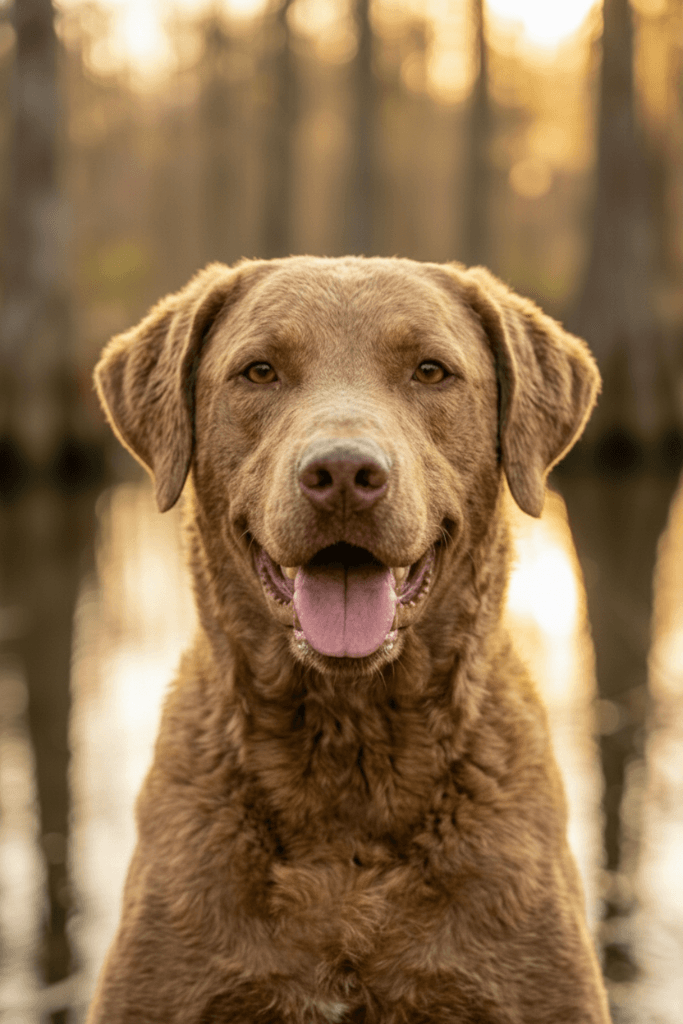
The Chesapeake Bay Retriever, often called the Chessie, was bred to retrieve waterfowl from icy waters and harsh weather. This background makes them exceptionally tough, determined, and resilient.
Unlike Labradors, Chessies are more independent and protective. They bond deeply with their family but may be reserved with strangers. In India, they require careful heat management due to their dense, oily double coat.
Personality Traits
- Strong-willed and confident
- Deeply loyal to family
- Protective by nature
- Not overly friendly with strangers
- Best suited for experienced owners
Energy & Activity
- High endurance and stamina
- Thrives with purpose-driven tasks
- Loves swimming and retrieving
- Needs structured physical outlets
Living Conditions in India
Climate Considerations
Dense double coat makes Indian summers challenging without precautions.
- • Ideal temperature: 10°-25°C
- • Summer care: Early morning exercise, strict midday rest, access to shade and water
- • Hydration: Fresh water available at all times
- • Best cities: Bangalore, Pune, hill stations
Ideal Living Situation
- ✓ Independent house with yard
- ✓ Homes near water bodies
- ✓ Active lifestyle households
- ✓ Owners with working-dog experience
- ✓ Cooler climate regions
Challenging Situations
- ✗ Small apartments
- ✗ Sedentary families
- ✗ Hot coastal cities
- ✗ First-time dog owners
- ✗ No access to outdoor exercise
Daily Exercise Requirements
Tailstart Tip: Chessies become stubborn and destructive if under-exercised.
Cost of Owning a Chesapeake Bay Retriever
Initial Purchase Cost
Rare in India; often sourced from specialized breeders or imports.
Monthly Expenses
Higher food intake due to large size and activity level.
Food & Nutrition
Ideal Nutrition Balance
Feeding Guidelines
3 meals/day, 450-600g total
2 meals/day, 600-800g total
2 meals/day, 550-700g total
Best Food Options in India
- Royal Canin Maxi
- Farmina N&D
- Orijen Large Breed
- Vet-approved home-cooked diet
Foods to Avoid
Health & Lifespan
Expected Lifespan
Generally robust, but joint and skin issues can occur.
Indian climate note: Heat stress must be actively prevented.
Common Health Conditions
Hip Dysplasia
Joint disorder common in large working breeds
Prevention: Responsible breeding, weight management
Progressive Retinal Atrophy (PRA)
Inherited eye condition
Prevention: Health-tested lineage
Skin Allergies
Dense coat can trap moisture
Prevention: Proper grooming and drying
Recommended Vet Care Schedule
Daily Care Routine
Grooming Requirements
Regular Tasks
Controls heavy shedding.
Do not over-bathe; preserves coat oils.
Important due to swimming.
Professional Grooming
Every 8 weeks
Full grooming session with professional
Services include:
Bath, de-shedding, nail trim
Tailstart Grooming: Coat requires minimal trimming but regular care.
Exercise Routine
90-120 min
Total daily exercise
2 long sessions
Per day minimum
High
Running, swimming, fetch
Ideal Activities
Training & Mental Stimulation
Why Training is Essential
Independent temperament requires firm, consistent training.
Basic Commands (3-6 months)
- Sit, Stay, Recall
- Leash control
Mental Stimulation Ideas
- Task-based games
- Scent work
Training Tip
Responds best to calm, confident leadership.
Frequently Asked Questions
Similar Breeds You Might Like
Explore other friendly, active breeds perfect for Indian families